Hello, Detroit--By Sammy Davis Jr.


Tuesday, August 24, 2010

An Ecumenical Walk for Peace (to end violence): Tribute to the Black Madonna

Detroit has tons of walks but a walk to end violence is very necessary and that is why I hope people attend this event because I definitely plan to attend.

Sunday 12 September 2010   ~   Detroit, Michigan USA


Details:

When:  This walk is now being planned and will take place on Sunday, 12 September 2010 beginning at 8:00 a.m. in Detroit, Michigan U.S.

Where:  Beginning at Central High School on Tuxedo St., down Linwood St. to the Shrine of the Black Madonna.

Who:  Mothers (and all who support Mothers) and others who have lost a child(ren) to violence (or whose child is incarcerated).

Why:  Because in as much as each human living survived the birth process, we all have a right to life and because the violence must end.  Mary (the mother of Jesus of Nazareth) was only a teenager when Jesus was born.  We do not know for certain, but she was likely not even 50 at the time of his brutal murder.  She is the model strength for suffering mothers everywhere.  She is especially an outstanding beacon for young women around the world to emulate.  She is is also a powerful example of one who knows the process of spiritual healing to overcome the effects of despair.  She is a reminder of the pain a woman bears who has lost her child(ren) to violence.  Yet, she is also a symbol of courage one can carry inside while working to end the violence.  The Black Madonna crosses religious lines in that Catholics, Protestants, Muslims, Hindus and others can identify with her and will support the cause and purpose of this Walk. Each step along the route will be a renewed commitment to our voice against violence and proclamation to stop it everywhere..

Other Activities:  A special Friday night forum and Sunday ecumenical program and a participatory ceremony are being planned.  This is a process on the Path to Peace.  To participate in this Walk, email us with your contact information.

Background:  Two of the women on the organizing committee for this Ecumenical Walk have experienced and survived violence within their own families.  One has lost a son (Osakwe Jahi) and the other a father (George Washington Crocheron).  But whoever death claims unjustly leaves behind a Mother or loved one who is permanently scared.  This Ecumenical Walk is a tribute to all Mothers who have mourned then found the strength to live on.

Who is The Black Madonna?  The simplest answer is ~ she is the Mother of Jesus the Christ of Nazareth.  The Black Madonna is revered by worshipers around the world.  All together there have been 450 or more statues and paintings of Mary around the world that are/were renown in which she is depicted with dark or black/brown skin and the majority of these can still be found in Europe.  Wikipedia and other websites have fascinating articles about this topic.  One website in particular has the interesting title Black Madonnas:
Still Black and Still Venerated.

Below is just a brief description of the Black Madonna

When reporting Pope John Paul II’s visit to Egypt in February of 2000, the Papal News Service stated: "Christianity and the world’s culture owe much to the Church of Egypt.”
"The Black Madonna cult is central to the Priory [of Sion]. . .To them at least, there is no doubt about the significance of the Black Madonna. Pierre Plantard de Saint-Clair writes explicitly, 'The Black Virgin is Isis and her name is Notre Dame de Lumiere [Our Lady of the Lights]." An informative exposition of Jeremiah 7:18 demonstrates that the Papal worship of the Virgin Mary is in essence the worship of the Babylonian Queen of Heaven, who is worshiped today as the Black Madonna by approximately 75% of the world's population!

In 2006, the Rev. Dr. Matthew Fox wrote an intriguing article entitled The Return of the Black Madonna: A Sign of Our Times or How the Black Madonna Is Shaking Us Up for the Twenty-First Century.  Below are just a few of the points from his paper:

Every archetype has its seasons. They come and go according to the deepest, often unconscious, needs of the psyche both personal and collective. Today the Black Madonna is returning.[1] She is coming, not going, and she is calling us to something new (and very ancient as well).

Within his essay, Dr. Fox interjects what he calls "a personal story":   ...my first encounter with the Black Madonna.   That encounter occurred in the Spring of 1968 when I was a student in Paris and took a brief trip—my first—to Chartres Cathedral located about thirty five miles from Paris. While all of Chartres was an amazing eye-opener for me, its sense of cosmology and humor and human dignity and inclusion of all of life, I stood before the statue of the black Madonna and was quite mesmerized. “What is this? Who is this?” I asked myself....

Before this Catholic priest goes on to list 11 reasons why the Black Madonna is so relevant in today's world, he makes this statement: She comes to shake us up which, as we shall see, is an ancient work of Isis, the Black Madonna

You may find it interesting to read the entire article, just to see the wide range of thinking about this phenomenal woman.

Below, at the end of this page you will find some extraordinary artistic attempts to portray the Black Madonna from around the world across the Internet.

Future:  A Memorial Park

Friday, August 20, 2010

Flood's Bar & Grille

Tonight I went to another nice place in the City of Detroit that I have been before but I wanted to share with the world. Flood's Bar & Grille is a great place to go on Sunday nights for Karaoke but it is a wonderful place to eat and listening to live jazz and even rap music. With two bars for people to order from drinks and tables all around to seat for those who don't want to stand. I strongly suggest this place as a great place for others to eat at.

For over 20 years, Flood's Bar & Grille has been Detroit's most celebrated restaurant and bar. Located in the heart of downtown Detroit, Flood's is the city's best place for great cocktails, soul food, outdoor dining and live music.  

Stop by to see why Flood's is Detroit's favorite afterwork and late-night scene if you don't believe my word.

Contact Information:
Flood's Bar & Grille
731 St. Antione
Detroit, MI 48226
313 -963-1090
http://www.floodsdetroit.com/
info@floodsdetroit.com

Z's Villa--A Nice Remote Eatery

Yesterday, I ate at one of the best places to eat in Detroit and it was Z's Villa. It is a quite and remote place to eat on Detroit's east side near Woodward. A great place to get lunch and a afternoon meal. Also it is a place that is great to patronize on the weekend as well. While the upstairs is larger than the downstairs, it also has a great outside patio with umbrellas that shade you from the sun. So this nice place is a hidden treasure in the City of Detroit and yet another reason why Detroit is on its way back.

Now if you like to eat meat and salads than Z's Villa is the place for you because they give you more than enough to eat. They give you tons to eat and the atmosphere is just so friendly. They even give you free freshly popped popcorn. So if you don't trust my word for it than I encourage you to visit Z's Villa and find out for yourself how good they really are.

Here's some information:
Z's Villa
42 Piquette
Detroit, MI 48202
(313) 874-2680
http://www.zsvilladet.com/

Saturday, January 17, 2009

Gifted Hands That Heal: Benjamin Solomon Carson Biography


September 18, 1951 • Detroit, Michigan
Neurosurgeon, motivational speaker, philanthropist, author

Ben Carson is one of the most famous and respected doctors in the world. Since the 1980s, his surgeries to separate conjoined twins have made international headlines, and his pioneering techniques have revolutionized the field of neurosurgery. Almost as important is that Carson has become a role model for people of all ages, especially children. Although he works thirteen-hour days and performs hundreds of operations a year, Carson makes time to spread his message that anything in life is possible, regardless of what color a person is or where he is from. Carson speaks from experience. He went from the inner-city streets of Detroit, Michigan, to the halls of Yale University, to director of pediatric neurosurgery at one of the most prestigious hospitals in the United States. In 2004 Carson was awarded the Healthcare Humanitarian Award because he has "enhanced the quality of human lives ... and has influenced the course of history through ongoing contributions to healthcare and medicine."

The "dumbest kid in the world"
Carson's mother, Sonya Copeland, was only thirteen years old when she married a much older Baptist minister from Tennessee named Robert Solomon Carson. After the couple moved to Detroit, Michigan, they had two boys, Curtis, born in 1949, and Benjamin Solomon, born on September 18, 1951. When young Ben was only eight years old, his parents divorced, and Sonya Carson was left to raise her two sons alone. Sonya moved the boys to Boston, Massachusetts, to be near family, but less than a year later the Carsons returned to Detroit. Sonya took on two, sometimes three, cleaning jobs at a time to support her children. In his writings, Carson has commented that even during the hardest times, his mother was the family's rock.

He was never a good student, but when Carson returned to his Michigan elementary school he realized that he was far behind the other fifth graders. In fact, in an Oracle interview with Andrew Pina, Carson recalled being laughed at by his classmates who, one day at recess, decided he was not only the dumbest kid in the fifth grade, but maybe the dumbest kid in the whole world. Life at Higgens Elementary was also not easy because it was a predominantly white school, and Carson, one of the few African American students, was taunted by his schoolmates and ignored by teachers.

"One of the things that really has inspired me and pushed me on is learning about the human brain and recognizing the incredible potential that lies there—but also recognizing how few people use it."

Sonya Carson decided to take matters into her own hands by switching off the television. Ben and Curtis were allowed to watch only two programs a week, and their mother made them read two books each week from the Detroit Public Library. The boys were also required to write book reports, which Sonya would underline and mark up. Only later did Ben Carson realize his mother, who had left school after the third grade, was barely able to read. "She pulled a fast one on us," Carson told David Gergen of PBS, "but after a while, something happened. I began to actually enjoy reading the books.... I could go anywhere in the world, be anybody, do anything. You know my imagination began to run wild." Within a year-and-a-half Carson went from the bottom of his class to the top of his class.

Carson Scholars
In 1994 Ben Carson and his wife, Candy, established the Carson Scholars Fund. Carson noticed that schools honored athletes with trophies and pep rallies, but that academic achievement often went unnoticed. He also wanted to encourage students to explore the fields of science and technology. According to the fund's Web site (http://www.carsonscholars.org), the goal of the nonprofit organization is to "to help our children stay competitive in science, math, and technology, as well as balance academic achievement with the high esteem our society gives to sports and entertainment.

Each year, scholarships of $1,000 are awarded to students in grades four through twelve who achieve a grade point average of at least 3.75, and who show a true commitment to their community. Scholarships are presented at an awards banquet where winners are also given certificates and medals. Currently, the program exists in Maryland, Washington, D.C., and Delaware. Certain cities in several other states, including Battle Creek, Michigan, also participate. The ultimate goal of Dr. Carson, "is to have a Carson scholar in every school in the United States."

Proceeds from the sale of Carson's books help support the scholarship program, but in 2003 Carson found a different funding source. Directors Peter and Bobby Farrelly approached the famous physician about playing himself in their movie, Stuck on You, about conjoined adult twins who are separated. The movie was a comedy, and at first Carson was doubtful about becoming involved. However, when he read the script he actually liked it and realized the film was going to be tastefully done. As Carson told U.S. News & World Report, "they do give you some insights on what that must be like to be connected to someone 24-7." The rest of the Carsons also appeared in the movie: Candy was a nurse, and Carson's children played extras in the hospital waiting room. When the movie premiered in Baltimore, Maryland, home of Johns Hopkins, all the proceeds went to the Carson Scholars Fund and to the BEN Fund, which provides financial aid to children who cannot afford necessary surgeries.

Another obstacle that threatened to defeat Carson was his violent temper. Sometimes his anger was provoked, like when he was teased. Other times he lashed out over insignificant things. When he was fourteen, for example, Carson stabbed a friend because the boy had changed the radio station. This incident terrified Carson, who realized, as he told Current Science, that he was headed for "jail, reform school, or the grave." Carson turned to prayer, and learned to make peace with himself and others. Even today, the physician relies on his Christian faith, and prays before and after each surgery.

Brain power
By the time he graduated from Southwestern High School in 1969, Carson was earning all A's, and his classmates, who only a few years before called him the dumbest kid in school, voted him the most likely to succeed. He received a full scholarship to attend Yale University in New Haven, Connecticut, where, in 1973, he earned a bachelor's degree in psychology. From there, he headed back to Michigan to attend medical school. Carson had wanted to become a doctor since he was a boy, after hearing about medical missionaries in sermons at church. He originally planned to become a psychiatrist, but during his first year in medical school he was intrigued by the field of neurosurgery (surgery of the brain, nerves, and spinal cord).

After earning a medical degree from the University of Michigan in 1977, the young physician was accepted into the residency program in general surgery at the prestigious Johns Hopkins Hospital in Baltimore, Maryland. Carson was the hospital's first African American neurosurgical resident, and by 1982, he was the chief resident of neurosurgery. In 1983 Carson and his wife, Lacena "Candy" Rustin (whom he had met at Yale), moved to Perth, Australia, because Carson had been invited to be the chief neurosurgical resident at the Sir Charles Gairdner Hospital, one of Australia's leading centers for brain surgery. Because there were few neurosurgeons in the country, Carson gained a great deal of experience in a short time. As he wrote in his book Gifted Hands, "In my one year there I got so much surgical experience that my skills were honed tremendously, and I felt remarkably capable and comfortable working on the brain."

In 1984 Carson returned to the United States, and to Johns Hopkins, where at age thirty-three he was named director of pediatric (child) neurosurgery. He was the youngest doctor ever to hold the position, and Carson remains head of pediatric neurosurgery to this day. Carson quickly gained a reputation as a skillful surgeon; he also became known as someone who would take on cases that other doctors thought were risky or hopeless. In addition, Carson was eager to combine his own surgical skills and knowledge of the workings of the brain, with technology. As a result, he became a pioneer in advanced surgical methods.

Some of Carson's most difficult cases involved patients who suffered from chronic seizures (uncontrollable attacks that come from abnormal electrical discharges in the brain). In some cases, patients were having more than one hundred seizures a day. Carson revived a surgical procedure that had been abandoned because it was considered too dangerous. Called a hemispherectomy, the surgery involves removing half of a patient's brain. Carson performed his first successful hemispherectomy in 1985, and since then the operation has helped many patients lead healthy, normal lives.

Separating conjoined twins
Carson made numerous other advancements in neurosurgery. For example, he developed a new method to treat brain-stem tumors and was the first doctor to perform surgery on a fetus inside the womb. However, by the late 1980s, Carson became known as an expert in one of the most difficult types of surgeries: separating conjoined twins (identical twins born with connected body parts). Conjoined twins occur once in every seventy thousand to one hundred thousand births. Separating conjoined twins is difficult because they sometimes share internal organs or major blood vessels.

In 1987 Carson was called upon to separate two babies from Ulm, Germany, named Patrick and Benjamin Binder. The boys were craniopagus twins, which means they were joined at the head. Craniopagal joining is among the rarest forms of conjoined twins, occurring about once in every two million births. Because the condition is so rare and because one, or both, children usually die in surgery, most doctors were skeptical of the case. Carson, however, agreed to perform the surgery. Because the boys were joined at the back of the head, and because they had separate brains, he felt the operation could be performed successfully. Plus, as Carson told Current Science, "In my field, you take all comers."

Carson and his team of more than seventy people prepared for five months before the surgery, which included performing several dress rehearsals. On September 5, 1987, after twenty-two hours in the operating room, the boys were successfully separated. Part of the success was because Carson had developed a method to stop the flow of blood while he and other surgeons performed the delicate task of untangling, dividing, and repairing shared blood vessels. Although the twins suffered brain damage, both survived the operation and became the first craniopagus twins to successfully be separated.

In the 1990s Carson surgically separated two sets of craniopagus twins. The 1994 separation of the Makwaeba twins in South Africa was not successful; both girls died from complications of the surgery. In 1997, however, Carson and his team were able to separate Luka and Joseph Banda, infant boys from Zambia, in South Central Africa. Both boys survived, and neither one suffered severe brain damage. The Bandas were the first set of twins joined at the tops of their heads to be successfully surgically separated.

Adult separation
In 2003 Carson faced perhaps his biggest challenge: separating two adult conjoined twins. Ladan and Laleh Bijani, who were joined at the head, were twenty-nine years old when they decided to be separated. The separation of adult craniopagus twins had never been attempted because the outcome was almost certain to be death for both patients. Even Carson, ever the optimist, was not sure what the results would be. He tried to talk the two women out of the surgery, but after many discussions with them, he agreed to move forward. Ladan and Laleh had law degrees, were extremely bright and, according to Carson, they knew exactly what was in store for them. As Carson recounted to Andrew Pina, more than anything the women wanted to live independent lives: "They said, 'We would rather die than spend another day together.'"

Carson and a team of more than one hundred surgeons, specialists, and assistants conducted the fifty-two-hour operation on July 8, 2003, in Singapore (Southeast Asia). They used a 3-D imaging technique that Carson had developed for the Banda operation. The computerized images allowed the team to practice "virtually" before the operation and allowed them to follow a computerized reconstruction of the twins' brains during surgery. Midway through the operation, however, complications set in, and Ladan and Laleh both died because of severe blood loss. As devastating as the loss was, Carson told the press, as reported in the Observer, "What they have contributed to science will live far beyond them."

Medical superstar
People around the world were intrigued by conjoined twins, and Carson's surgeries generated a lot of press. At first, the soft-spoken doctor was known in the media only as a hospital spokesperson who explained complicated operations in terms that everyone could understand. Eventually, Carson's own story began to pique the interest of the public. Everyone was fascinated that such a "miracle worker" had come from such humble beginnings, and soon Carson became a motivational speaker, much in demand at schools, hospitals, and businesses. He traveled across the United States, explaining that if he was able to overcome such obstacles as poverty and racism, anyone could. On his Web site, Carson outlined what he believes to be the keys to success: "One's ability to discover his or her potential for excellence; the acquisition of knowledge to develop it; and a willingness to help others." The biggest key is education, which according to Carson, "leads to liberation."

In 2002 Carson was forced to cut back on his public appearances a bit when he faced a medical problem of his own. In June he was diagnosed with prostate cancer, but fortunately the cancer was caught in time. Carson the surgeon became Carson the patient, but that did not stop him from taking an active role in his own case. The feisty doctor reviewed his own X-rays and quizzed the team of surgeons who operated on him. Carson fully recovered from his surgery and came away with a clean bill of health.

Because of his brush with death, however, Carson made a few life changes. Although he was always interested in cancer, Carson told Ebony, now he is "looking more at root causes of cancer and how it can be prevented." He still operates on more than three hundred children a year, but he has been trying to shorten his days: prior to his cancer he used to work from 7:00 in the morning until 8:00 at night. Now, he tries to leave the hospital at 6:15 P.M. This gives him more time to spend with his wife and three children, Murray, Benjamin Jr., and Rhoeyce, and to indulge in his other passion, playing pool.

Carson still keeps up a busy speaking schedule, but children also visit him at Johns Hopkins to see their role model in person. In addition, Carson has written several books that recount his life story and encourage people everywhere to strive for excellence. Because of his unflagging commitment to children and his many medical breakthroughs, Carson has received countless awards and honorary degrees. In 2004 there was even talk of a Hollywood movie that would tell the world more about the man Ebony magazine called a "medical superstar."
In addition to his medical practice, Dr. Carson is in constant demand as a public speaker, and devotes much of his time to meeting with groups of young people. In 2008, the White House announced that Benjamin Carson would receive the Presidential Medal of Freedom, the nation's highest civilian honor.

For More Information
Books

Carson, Ben, with Cecil Murphey. Gifted Hands. Washington, DC: Review and Herald, 1990.

Carson, Ben, with Cecil Murphey. Think Big: Unleashing Your Potential for Excellence. Grand Rapids, MI: Zondervan, 1992.

Carson, Ben, with Gregg Lewis. The Big Picture: Getting Perspective on What's Really Important in Life. Grand Rapids, MI: Zondervan, 1999.

Periodicals
"Dr. Ben Carson: Top Surgeon's Life-and-Death Struggle with Prostate Cancer." Ebony (January 2003): p. 38.

Hallett, Vicky. "He Split Up Matt and Greg." U.S. News & World Report (December 15, 2003): p. 16.

McLaughlin, Sabrina. "Split Decisions: Surgeon Ben Carson Is a Master at Separating Conjoined Twins." Current Science (April 16, 2004).

Pina, Andrew. "A Look at 'The Big Picture.'" The Oracle (April 12, 2004).

Vaira, Douglas. "The Good Doctor: Dr. Benjamin Carson Proves That with Determination and Confidence, Anything Is Possible." Association Management (October 2003): pp. 56–61.

Web Sites
Dr. Ben Carson Web site. http://www.drbencarson.com/ (accessed on June 27, 2004).

Gergen, David. "The Big Picture: Interview with Dr. Ben Carson." PBS Online NewsHour (September 7, 1999). http://www.pbs.org/newshour/gergen/july-dec99/carson_9-7.html (accessed June 27, 2004).

McKie, Robin. "Doctors 'Begged' Twins to Call Off Surgery." Observer (July 13, 2003). http://www.guardian.co.uk/iran/story/0,12858,997302,00.html (accessed on June 26, 2004).

"Pediatric Neurosurgeon Benjamin Carson, M.D. to Separate Adult Conjoined Twins in Singapore." Johns Hopkins Press Release (June 12, 2003). http://www.hopkinsmedicine.org/press/2003/June/030612.htm (accessed on June 27, 2004.

Ben Carson Story


Ben Carson Story

It's So Cold in the D


I don’t condone cursing but the truth is, it is so cold in the D so how can anyone keep peace there. Its so cold in the D not just in terms of the weather but in terms of its education system, economy and public safety. Nothing in Detroit right now is right but all of that can change if we work to improve it. Detroit needs our help and those of us who love Detroit need to get up to improve the conditions of Detroit so it is no long cold in the D. We can warm the D but we must be willing to do it together as one. We must be willing to make the necessary sacrifices to improve Detroit once and for all so future Generations can raise their families in one of America’s greatest cities. Detroit is that beckon of hope that we all can believe that our dreams can come true but we all must work to make those dreams a reality by improving Detroit each and every day—socially, spiritually, culturally and economically.

Thursday, October 16, 2008

Jerome Bettis: The Bus Ride to Victory


Jerome Abram Bettis, nicknamed "The Bus" (born February 16, 1972), is a former American football halfback for the NFL's Los Angeles/St. Louis Rams and Pittsburgh Steelers. Bettis is considered one of the best big backs ever due to his amazing footwork and sheer power, and is fifth on the National Football League's all-time rushing list. Bettis weighed at a solid 275lbs at 5-10. He retired in 2006 after a Super Bowl victory. Bettis attended Mackenzie High School in Detroit, and the University of Notre Dame.

Bettis was picked in the first round (10th overall) of the 1993 NFL draft by the then Los Angeles Rams. A star even in his rookie year, he rushed for 1,429 yards in 1993, and was named Offensive Rookie of the Year. He quickly earned the nickname "The Battering Ram." He rushed for over 1,000 in his second season with the Rams.

The Rams moved to St. Louis for the 1995 season, and coach Chuck Knox was forced out in favor of Rich Brooks. Brooks favored a more pass-oriented attack as opposed to Knox' ground-based game, and Bettis all but vanished from the offense. When the Rams let it be known that they wanted to draft oft-troubled running back Lawrence Phillips, it was obvious Bettis' days in St. Louis were numbered.

Meanwhile, the Steelers needed a running back: Bam Morris, their featured back in the 1995 season, had pleaded guilty to marijuana possession and was cut by the team in June 1996. Bettis was traded to Pittsburgh on draft day (immediately after the Rams drafted Phillips) with a third round draft pick in exchange for a second round pick in 1996 and a fourth round pick in 1997. While Bettis became the Steelers' rock at running back for almost a decade, Phillips' off-field problems led to the Rams cutting him in the middle of the following season. The Rams wouldn't have another featured back until trading for Marshall Faulk in 1999.

Bettis rushed for over 1,000 yards in each of his first six seasons with the Steelers between 1996 and 2001. Included in that run were three campaigns of over 1,300 yards. In 1997, Bettis rushed for a career-best 1,665 yards in the team's first 15 games. However, because the team had already wrapped up its playoff position, he was rested for the regular season finale and finished 25 yards short of the team's single-season record.

Bettis was leading the league with 1,072 rushing yards in 2001 when he suffered an injury that sidelined him for the remainder of the regular season. Injuries would also cost him part of the 2002 season and he then began the 2003 season as a backup to Amos Zereoue. Despite regaining his starting role midway through the 2003 season, Bettis again found himself a backup to start the 2004 season, this time to Duce Staley. But when an injury took Staley out of action mid-way through the year, Bettis stepped in and gained 100+ yards in six of the next eight games and would have likely topped 1,000 yards for the season if not for the decision to rest him in the Steelers' meaningless final regular season game. The remarkable late season effort led to the sixth Pro-Bowl berth of his career.

Bettis spent the 2005 season as a full-time short yardage running back, but managed two memorable games along the way: First, a 101 yard, two touchdown effort in a pivotal week 14 win over Chicago (his second-to-last game in Pittsburgh) that is often remembered for a play in which he ran over Bears' linebacker Brian Urlacher on the goal line during a heavy snow squall. And then second, his three touchdowns in a win over Detroit to clinch a playoff berth on the last day of the season (his last game in Pittsburgh). He would finish the season and his career as the NFL's 5th leading all-time rusher.

Bettis was also at the center of one of the most controversial calls in NFL history. During a Thanksgiving Day game with the Detroit Lions on November 26, 1998, Bettis was sent out as the Steelers representative for the overtime coin toss. Bettis called "tails" while the coin was in the air but referee Phil Luckett declared that Bettis called "heads" and awarded possession to Detroit, who would go on to win the game before Pittsburgh had the chance to have possession. After reviewing the incident, the NFL changed the rule and declared that the call of "heads" or "tails” would be made before the coin was tossed rather than during the coin toss and that at least two officials would be present during the coin toss. Some have jokingly referred to the new procedure as the "Jerome Bettis Rule". The readers of ESPN voted the incident as the #7 on its list of the top ten worst sports officiating calls of all time.

In another unique occurrence, Bettis later put together one of the most bizarre single game stat lines in NFL history. In the 2004 season opener, he carried the ball five times for a total of only one yard, a 0.2 yards per carry average. However, he scored 18 points on those carries with three touchdowns.

During that 2004 season, Bettis and New York Jets running back Curtis Martin dueled for position on the all-time rushing yards leaderboard. Bettis entered the season in 6th place all-time and 684 yards ahead of Martin in 9th place. Because Bettis was the backup in Pittsburgh for the start of the season, Martin was able to pass Bettis in week 13 until the Steelers played their game later in the day and Bettis retook the lead by 6 yards. When the Jets traveled to Martin's home town of Pittsburgh to play the Steelers the following week, both backs would cross the 13,000-yard mark, making this the first time two players crossed the 13,000 yard mark (or other similarly high yardage milestones) in the same game. Their combined career totals were also one of the biggest combined career totals for opposing running backs in history. At the end of the game, Martin would lead Bettis by 9 yards. Two weeks later in week 16, Bettis would again pass Martin and establish himself with a lead of 81 yards. In doing so, Bettis passed Eric Dickerson for 4th place on the all-time list. Bettis sat out the final week of the season, and when Martin rushed for 153 yards that week he passed Dickerson and Bettis for the final time.

After the Steelers' defeat in the 2004 AFC Championship Game on January 23, 2005, Bettis announced that he was considering retirement, but would not make a final decision for several months to prevent the sting of the defeat from clouding his judgment. Later, Bettis agreed to stay with the Steelers for another season. He stated he would love to play in the Super Bowl in 2006 since it was to be played in his hometown of Detroit. His wish came true as the Steelers played in, and won, Super Bowl XL (40) against the Seattle Seahawks 21-10 on February 5th, 2006.

Bettis finished his 13 NFL seasons as the NFL's 5th all-time leading rusher with 13,662 yards and 91 touchdowns. He also caught 200 passes for 1,449 yards and 3 touchdowns. He was named to the Pro Bowl in 1993, 1994, 1996, 1997, 2001, and 2004. Bettis won the NFL Comeback Player of the Year award in 1996, and in 2002 he was the recipient of the Walter Payton Man of the Year Award. While Bettis finished with 1,542 more yards than Franco Harris on the NFL's all-time rushing list, Harris remains the Steelers all-time leading rusher on account of 3,091 of those yards coming while Bettis was with the Rams, which do not count towards the Steelers' all-time totals with the team.

Most people think Bettis acquired the nickname The Bus from legendary Steelers radio color commentator Myron Cope; but Myron only popularized the nickname after hearing a brother of a fellow Notre Dame alumni call Jerome "Bussy" in Green Bay. Although some would think otherwise, the nickname had no association with wearing a black and gold uniform; it actually comes from his ability to carry multiple defenders on his back, like a bus ride, during his carries. It was during the Green Bay broadcast that Cope starting using the nickname "The Bus." Jerome credits someone at the Notre Dame school newspaper with first using the now famous nickname.

Another lesser known nickname for Bettis was "the closer". He was given this nickname by former Steeler head coach Bill Cowher because whenever Pittsburgh was ahead and was ready to close out the game Cowher would send in Bettis to run out the clock. This was due to Bettis' very low fumbling percentage and the fact that he was difficult to tackle.

The road to Super Bowl XL
Shortly after the Steelers lost the 2004-2005 AFC Championship game to the eventual Super Bowl XXXIX champion New England Patriots, Ben Roethlisberger approached Bettis. He promised Bettis that if he came back for one last season, he would get him to the Super Bowl. Apparently, it was this promise that got Jerome Bettis to play one last season. In 12 NFL seasons, Bettis had reached the playoffs 5 times, but had never been in the Super Bowl.

In week 17 of the 2005 NFL season, Bettis rushed for 41 yards and three touchdowns against the Detroit Lions. The Steelers won 35-21, and thanks to Bettis's three touchdowns, they clinched a playoff berth. When Bill Cowher pulled Bettis from the game late in the fourth quarter, he was given a standing ovation from the Steeler fans. This game would be the last home game (not including the neutral-site Super Bowl) for Jerome Bettis.

Bettis contributed 52 yards and a touchdown in the Steelers' wildcard playoff victory over the Cincinnati Bengals on January 8. After their wildcard win, Ben Roethlisberger revealed to the team that he promised to Bettis that he would get him to the Super Bowl, in order to get him to come back for the 2005 season.

On January 15, 2006, Bettis was the center of one of football's most memorable endings in a divisional playoff game against the Indianapolis Colts. While the Steelers offensive attack was mostly pass driven during the game, Bettis ran well, taking in 46 yards on 17 rushes, including one touchdown. When the Steelers took possession of the ball on the Indianapolis 2 yard line with 1:20 remaining in the game, leading 21-18, the outcome seemed almost certain. The first play from scrimmage went to the surehanded Bettis, who had not fumbled once the entire year. As Bettis ran towards the end zone, Colts linebacker Gary Brackett popped the ball out of Jerome's hands, where it was picked up by cornerback Nick Harper, (seemingly another sign of the Sports Illustrated cover jinx) who was stopped from returning the fumble all the way for a touchdown by Steelers quarterback Ben Roethlisberger. Ultimately, however, Bettis's mistake did not result in a Steelers loss, as Colts kicker Mike Vanderjagt missed a 46-yard game-tying field goal, ending the game with a 21-18 Steelers victory.

The next week, the Steelers were set to face off against the Denver Broncos in the AFC Championship game. Bettis, who had never been to a Super Bowl in his storied career, delivered a rousing speech to his teammates the day before the game, asking them to "Just get me to Detroit," his hometown, where Super Bowl XL was to be played. Bettis's wish was granted, as he and the Steelers advanced to Super Bowl XL with a 34-17 win over the Broncos, led by Ben Roethlisberger's arm and Bettis's 39 yards on 15 carries, including a touchdown. After the game was over, Bettis found his parents in the crowd and mouthed the words "We're going home" to them.

In front of a crowd that was estimated by NFL analysts in attendance to be "80% - 90% Steeler fans" (as evident by the influx of "Terrible Towels" seen waving in the crowd), Pittsburgh would go on to defeat the Seattle Seahawks in Super Bowl XL, 21-10. Bettis rushed for 43 yards on 14 carries; an average of 3.1 yards per carry.

Asked about the possibility of retirement, Bettis announced, "It's been an incredible ride. I played this game to win a championship. I'm a champion [now], and I think the Bus' last stop is here in Detroit." Thus, Jerome Bettis officially announced his retirement standing on the champions' podium, holding the Vince Lombardi Trophy. Hines Ward, the MVP of the game, said during the Super Bowl commercial; "I'm going to Disney World and I'm taking The Bus!"

After retirement
On 31 January 2006, Detroit Mayor Kwame Kilpatrick and the City Council presented the key to the city to Bettis and declared the week "Jerome Bettis Week" for being "a shining example of what a kid with a dream from Detroit can accomplish with hard work and determination."

Governor Jennifer M. Granholm of the State of Michigan declared 1 February 2006 to be Jerome Bettis Day.

In February 2006, at the 2006 Winter Olympics, NBC Sports announced that Bettis had been signed as a studio commentator for NBC's new Football Night in America Sunday night pregame show.

Pittsburgh's Bettis to work as NBC studio analyst

On Tuesday, April 18, 2006, Bettis and his parents teamed up with Don Barden, chairman and chief executive officer of PITG Gaming LLC, in order to get a casino called the Majestic Star, on Pittsburgh's North Side. Their plan would aid the NHL's Pittsburgh Penguins with funding for a new ice arena. Barden said that he would give $7.5 million a year for 30 years to help build a new arena.

Bettis opened a restaurant called "Jerome Bettis' Grille 36" on June 5, 2007 on Pittsburgh's Northside.

On May 21st, 2006 Bettis received an honorary Doctoral degree from Lawrence Technological University in Southfield, Michigan for providing remarkable benefits to young people. He will be awarded the Doctor of Humanities, honoris causa, recognizing his leadership in founding the innovative “Cyber Bus” program that to date has enabled some 120 Detroit middle and high school students to both build and use the latest computer technology.

Before the Steelers' home opener of the 2006 NFL season, a large school bus drove onto the field, and Bettis stepped out to a massive crowd ovation. He was one of several Steelers players being honored as part of the celebration of their five Super Bowl victories; Lynn Swann and Franco Harris were also present.

Bettis makes a cameo as himself in season 3 of the NBC comedy series The Office. Signing autographs at a paper convention, Michael Scott tries to invite him to a room party, which Bettis declines. Later, Michael claims Bettis is nicknamed "The Bus" because he is afraid of flying.

Bettis also appeared in a commercial for Sunday Night Football, where he's handed the keys to a bus that happens to belong to John Madden.

He lives in a suburb of Atlanta, Roswell, Georgia. He and his family also maintain a home in Pittsburgh, Pennsylvania

In July 2006, Bettis married his long time girlfriend, Trameka Boykin, in Montego Bay, Jamaica. The couple has a daughter, Jada, and a son Jerome Jr., together.

Bettis had made political donations to both Democratic and Republican candidates; specifically the Congressional campaigns of Democratic U.S. Representative Carolyn Cheeks Kilpatrick and Republican President George W. Bush. On March 29, 2008, Bettis accompanied Barack Obama on a campaign visit to the United States Steel plant in Braddock, Pennsylvania.

Off the field
--Bettis is currently the host of The Jerome Bettis Show on WPXI-TV in Pittsburgh, airing Saturdays at 7:00 PM and 1:00 AM.
--He used to reside in Gibsonia, Pennsylvania during the off season
--He began a charity called the Bus Stops Here Foundation to aid underprivileged children in 1997. --He did a commercial that was a remake of
Joe Greene's famous commercial where Jerome shows an asthmatic boy that Jerome also is asthmatic yet he is able to play professional sports and so can the boy with proper treatment for his asthma. Or as Bettis says at the end, "Asthma doesn't stop the Bus, and it doesn't have to stop you."
--His book, Driving Home: My Unforgettable Super Bowl Run, came out in September 2006, published by Triumph Books.
--He is now a commentator for the
NFL Network and an NBC studio analyst for Football Night in America.
--He owns a restaurant on the Northshore of
Pittsburgh called Jerome Bettis Grille 36.
--He has achieved a "Perfect 300" in bowling and was considered one of the best bowlers in the
National Football League and even got inducted into the celebrity bowling hall of fame. On Sundays growing up, Bettis and his family were not watching the one o'clock football games. His family of bowlers was out at the lanes each Sunday in Detroit.
--He is part-owner of several minor league baseball teams - the
Altoona Curve, State College Spikes, and Myrtle Beach Pelicans.
--Named his son Jerome Jr.
--He shares the distinct honor of being the recipient of the key to the city of Detroit, MI

Inner City Blues (Make Me Wanna Holler) By Marvin Gaye


Dah, dah, dah, dah
dah, dah, dah, dah, dah, dah, dah
Dah, dah, dah, dah
Dah, dah, dah, dah, dah, dah, dah
Dah, dah, dah

Rockets, moon shots
Spend it on the have nots
Money, we make it
Fore we see it you take it

Oh, make you wanna holler
The way they do my life
Make me wanna holler
The way they do my life
This ain't livin', This ain't livin'
No, no baby, this ain't livin'
No, no, no

Inflation no chance
To increase finance
Bills pile up sky high
Send that boy off to die

Oh, make me wanna holler
The way they do my life
Make me wanna holler
The way they do my life

Dah, dah, dah
Dah, dah, dah

Hang ups, let downs
Bad breaks, set backs
Natural fact is
I can't pay my taxes

Oh, make me wanna holler
And throw up both my hands
Yea, it makes me wanna holler
And throw up both my hands

Crime is increasingTrigger happy policing
Panic is spreading
God knows where we're heading
Oh, make me wanna holler
They don't understand

Dah, dah, dah
Dah, dah, dah
Dah, dah, dah

Mother, motherEverybody thinks we're wrong
Who are they to judge us
Simply cause we wear our hair long

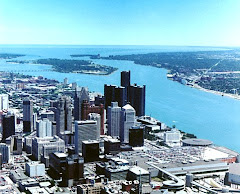
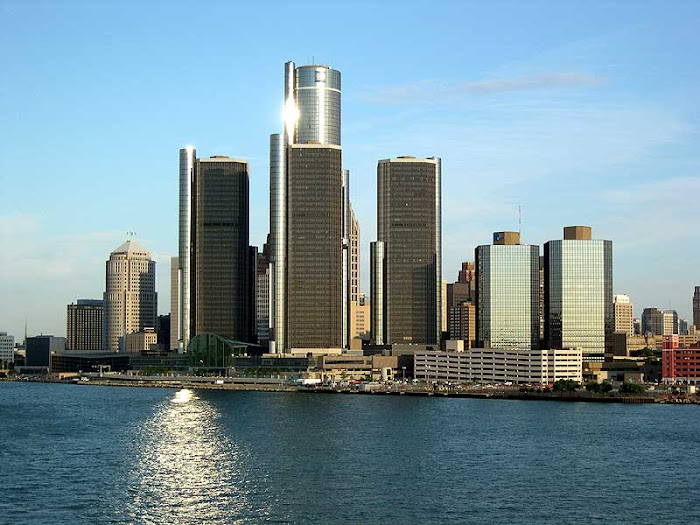
Detroit's Downtown


Don't Look Back Detroit, Keep on Pushing


Detroit as the Temptations hae said, we have to keep on pushing and not look back. We have to leave all our troubles behind us and look forward to a brighter future for not only the citizens of Detroit but the city of Detroit. We have to keep on walking Detroit and keep on pushing forward as we leave our past behind. Stall Tall Detroit and look for a future of Greatness as we as Detroiters strive and survive together.