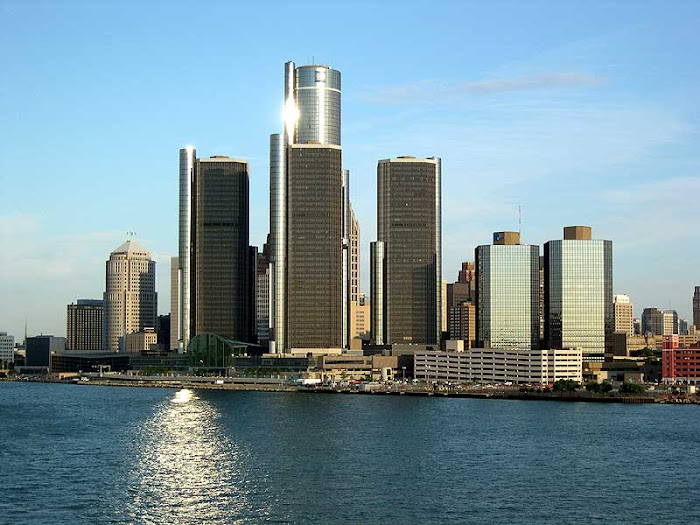
September 18, 1951 • Detroit, Michigan
Neurosurgeon, motivational speaker, philanthropist, author
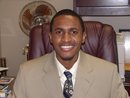
Ben Carson is one of the most famous and respected doctors in the world. Since the 1980s, his surgeries to separate conjoined twins have made international headlines, and his pioneering techniques have revolutionized the field of neurosurgery. Almost as important is that Carson has become a role model for people of all ages, especially children. Although he works thirteen-hour days and performs hundreds of operations a year, Carson makes time to spread his message that anything in life is possible, regardless of what color a person is or where he is from. Carson speaks from experience. He went from the inner-city streets of Detroit, Michigan, to the halls of Yale University, to director of pediatric neurosurgery at one of the most prestigious hospitals in the United States. In 2004 Carson was awarded the Healthcare Humanitarian Award because he has "enhanced the quality of human lives ... and has influenced the course of history through ongoing contributions to healthcare and medicine."
The "dumbest kid in the world"
Carson's mother, Sonya Copeland, was only thirteen years old when she married a much older Baptist minister from Tennessee named Robert Solomon Carson. After the couple moved to Detroit, Michigan, they had two boys, Curtis, born in 1949, and Benjamin Solomon, born on September 18, 1951. When young Ben was only eight years old, his parents divorced, and Sonya Carson was left to raise her two sons alone. Sonya moved the boys to Boston, Massachusetts, to be near family, but less than a year later the Carsons returned to Detroit. Sonya took on two, sometimes three, cleaning jobs at a time to support her children. In his writings, Carson has commented that even during the hardest times, his mother was the family's rock.
He was never a good student, but when Carson returned to his Michigan elementary school he realized that he was far behind the other fifth graders. In fact, in an Oracle interview with Andrew Pina, Carson recalled being laughed at by his classmates who, one day at recess, decided he was not only the dumbest kid in the fifth grade, but maybe the dumbest kid in the whole world. Life at Higgens Elementary was also not easy because it was a predominantly white school, and Carson, one of the few African American students, was taunted by his schoolmates and ignored by teachers.
"One of the things that really has inspired me and pushed me on is learning about the human brain and recognizing the incredible potential that lies there—but also recognizing how few people use it."
Sonya Carson decided to take matters into her own hands by switching off the television. Ben and Curtis were allowed to watch only two programs a week, and their mother made them read two books each week from the Detroit Public Library. The boys were also required to write book reports, which Sonya would underline and mark up. Only later did Ben Carson realize his mother, who had left school after the third grade, was barely able to read. "She pulled a fast one on us," Carson told David Gergen of PBS, "but after a while, something happened. I began to actually enjoy reading the books.... I could go anywhere in the world, be anybody, do anything. You know my imagination began to run wild." Within a year-and-a-half Carson went from the bottom of his class to the top of his class.
Carson Scholars
In 1994 Ben Carson and his wife, Candy, established the Carson Scholars Fund. Carson noticed that schools honored athletes with trophies and pep rallies, but that academic achievement often went unnoticed. He also wanted to encourage students to explore the fields of science and technology. According to the fund's Web site (http://www.carsonscholars.org), the goal of the nonprofit organization is to "to help our children stay competitive in science, math, and technology, as well as balance academic achievement with the high esteem our society gives to sports and entertainment.
Each year, scholarships of $1,000 are awarded to students in grades four through twelve who achieve a grade point average of at least 3.75, and who show a true commitment to their community. Scholarships are presented at an awards banquet where winners are also given certificates and medals. Currently, the program exists in Maryland, Washington, D.C., and Delaware. Certain cities in several other states, including Battle Creek, Michigan, also participate. The ultimate goal of Dr. Carson, "is to have a Carson scholar in every school in the United States."
Proceeds from the sale of Carson's books help support the scholarship program, but in 2003 Carson found a different funding source. Directors Peter and Bobby Farrelly approached the famous physician about playing himself in their movie, Stuck on You, about conjoined adult twins who are separated. The movie was a comedy, and at first Carson was doubtful about becoming involved. However, when he read the script he actually liked it and realized the film was going to be tastefully done. As Carson told U.S. News & World Report, "they do give you some insights on what that must be like to be connected to someone 24-7." The rest of the Carsons also appeared in the movie: Candy was a nurse, and Carson's children played extras in the hospital waiting room. When the movie premiered in Baltimore, Maryland, home of Johns Hopkins, all the proceeds went to the Carson Scholars Fund and to the BEN Fund, which provides financial aid to children who cannot afford necessary surgeries.
Another obstacle that threatened to defeat Carson was his violent temper. Sometimes his anger was provoked, like when he was teased. Other times he lashed out over insignificant things. When he was fourteen, for example, Carson stabbed a friend because the boy had changed the radio station. This incident terrified Carson, who realized, as he told Current Science, that he was headed for "jail, reform school, or the grave." Carson turned to prayer, and learned to make peace with himself and others. Even today, the physician relies on his Christian faith, and prays before and after each surgery.
Brain power
By the time he graduated from Southwestern High School in 1969, Carson was earning all A's, and his classmates, who only a few years before called him the dumbest kid in school, voted him the most likely to succeed. He received a full scholarship to attend Yale University in New Haven, Connecticut, where, in 1973, he earned a bachelor's degree in psychology. From there, he headed back to Michigan to attend medical school. Carson had wanted to become a doctor since he was a boy, after hearing about medical missionaries in sermons at church. He originally planned to become a psychiatrist, but during his first year in medical school he was intrigued by the field of neurosurgery (surgery of the brain, nerves, and spinal cord).
After earning a medical degree from the University of Michigan in 1977, the young physician was accepted into the residency program in general surgery at the prestigious Johns Hopkins Hospital in Baltimore, Maryland. Carson was the hospital's first African American neurosurgical resident, and by 1982, he was the chief resident of neurosurgery. In 1983 Carson and his wife, Lacena "Candy" Rustin (whom he had met at Yale), moved to Perth, Australia, because Carson had been invited to be the chief neurosurgical resident at the Sir Charles Gairdner Hospital, one of Australia's leading centers for brain surgery. Because there were few neurosurgeons in the country, Carson gained a great deal of experience in a short time. As he wrote in his book Gifted Hands, "In my one year there I got so much surgical experience that my skills were honed tremendously, and I felt remarkably capable and comfortable working on the brain."
In 1984 Carson returned to the United States, and to Johns Hopkins, where at age thirty-three he was named director of pediatric (child) neurosurgery. He was the youngest doctor ever to hold the position, and Carson remains head of pediatric neurosurgery to this day. Carson quickly gained a reputation as a skillful surgeon; he also became known as someone who would take on cases that other doctors thought were risky or hopeless. In addition, Carson was eager to combine his own surgical skills and knowledge of the workings of the brain, with technology. As a result, he became a pioneer in advanced surgical methods.
Some of Carson's most difficult cases involved patients who suffered from chronic seizures (uncontrollable attacks that come from abnormal electrical discharges in the brain). In some cases, patients were having more than one hundred seizures a day. Carson revived a surgical procedure that had been abandoned because it was considered too dangerous. Called a hemispherectomy, the surgery involves removing half of a patient's brain. Carson performed his first successful hemispherectomy in 1985, and since then the operation has helped many patients lead healthy, normal lives.
Separating conjoined twins
Carson made numerous other advancements in neurosurgery. For example, he developed a new method to treat brain-stem tumors and was the first doctor to perform surgery on a fetus inside the womb. However, by the late 1980s, Carson became known as an expert in one of the most difficult types of surgeries: separating conjoined twins (identical twins born with connected body parts). Conjoined twins occur once in every seventy thousand to one hundred thousand births. Separating conjoined twins is difficult because they sometimes share internal organs or major blood vessels.
In 1987 Carson was called upon to separate two babies from Ulm, Germany, named Patrick and Benjamin Binder. The boys were craniopagus twins, which means they were joined at the head. Craniopagal joining is among the rarest forms of conjoined twins, occurring about once in every two million births. Because the condition is so rare and because one, or both, children usually die in surgery, most doctors were skeptical of the case. Carson, however, agreed to perform the surgery. Because the boys were joined at the back of the head, and because they had separate brains, he felt the operation could be performed successfully. Plus, as Carson told Current Science, "In my field, you take all comers."
Carson and his team of more than seventy people prepared for five months before the surgery, which included performing several dress rehearsals. On September 5, 1987, after twenty-two hours in the operating room, the boys were successfully separated. Part of the success was because Carson had developed a method to stop the flow of blood while he and other surgeons performed the delicate task of untangling, dividing, and repairing shared blood vessels. Although the twins suffered brain damage, both survived the operation and became the first craniopagus twins to successfully be separated.
In the 1990s Carson surgically separated two sets of craniopagus twins. The 1994 separation of the Makwaeba twins in South Africa was not successful; both girls died from complications of the surgery. In 1997, however, Carson and his team were able to separate Luka and Joseph Banda, infant boys from Zambia, in South Central Africa. Both boys survived, and neither one suffered severe brain damage. The Bandas were the first set of twins joined at the tops of their heads to be successfully surgically separated.
Adult separation
In 2003 Carson faced perhaps his biggest challenge: separating two adult conjoined twins. Ladan and Laleh Bijani, who were joined at the head, were twenty-nine years old when they decided to be separated. The separation of adult craniopagus twins had never been attempted because the outcome was almost certain to be death for both patients. Even Carson, ever the optimist, was not sure what the results would be. He tried to talk the two women out of the surgery, but after many discussions with them, he agreed to move forward. Ladan and Laleh had law degrees, were extremely bright and, according to Carson, they knew exactly what was in store for them. As Carson recounted to Andrew Pina, more than anything the women wanted to live independent lives: "They said, 'We would rather die than spend another day together.'"
Carson and a team of more than one hundred surgeons, specialists, and assistants conducted the fifty-two-hour operation on July 8, 2003, in Singapore (Southeast Asia). They used a 3-D imaging technique that Carson had developed for the Banda operation. The computerized images allowed the team to practice "virtually" before the operation and allowed them to follow a computerized reconstruction of the twins' brains during surgery. Midway through the operation, however, complications set in, and Ladan and Laleh both died because of severe blood loss. As devastating as the loss was, Carson told the press, as reported in the Observer, "What they have contributed to science will live far beyond them."
Medical superstar
People around the world were intrigued by conjoined twins, and Carson's surgeries generated a lot of press. At first, the soft-spoken doctor was known in the media only as a hospital spokesperson who explained complicated operations in terms that everyone could understand. Eventually, Carson's own story began to pique the interest of the public. Everyone was fascinated that such a "miracle worker" had come from such humble beginnings, and soon Carson became a motivational speaker, much in demand at schools, hospitals, and businesses. He traveled across the United States, explaining that if he was able to overcome such obstacles as poverty and racism, anyone could. On his Web site, Carson outlined what he believes to be the keys to success: "One's ability to discover his or her potential for excellence; the acquisition of knowledge to develop it; and a willingness to help others." The biggest key is education, which according to Carson, "leads to liberation."
In 2002 Carson was forced to cut back on his public appearances a bit when he faced a medical problem of his own. In June he was diagnosed with prostate cancer, but fortunately the cancer was caught in time. Carson the surgeon became Carson the patient, but that did not stop him from taking an active role in his own case. The feisty doctor reviewed his own X-rays and quizzed the team of surgeons who operated on him. Carson fully recovered from his surgery and came away with a clean bill of health.
Because of his brush with death, however, Carson made a few life changes. Although he was always interested in cancer, Carson told Ebony, now he is "looking more at root causes of cancer and how it can be prevented." He still operates on more than three hundred children a year, but he has been trying to shorten his days: prior to his cancer he used to work from 7:00 in the morning until 8:00 at night. Now, he tries to leave the hospital at 6:15 P.M. This gives him more time to spend with his wife and three children, Murray, Benjamin Jr., and Rhoeyce, and to indulge in his other passion, playing pool.
Carson still keeps up a busy speaking schedule, but children also visit him at Johns Hopkins to see their role model in person. In addition, Carson has written several books that recount his life story and encourage people everywhere to strive for excellence. Because of his unflagging commitment to children and his many medical breakthroughs, Carson has received countless awards and honorary degrees. In 2004 there was even talk of a Hollywood movie that would tell the world more about the man Ebony magazine called a "medical superstar."
Neurosurgeon, motivational speaker, philanthropist, author
Ben Carson is one of the most famous and respected doctors in the world. Since the 1980s, his surgeries to separate conjoined twins have made international headlines, and his pioneering techniques have revolutionized the field of neurosurgery. Almost as important is that Carson has become a role model for people of all ages, especially children. Although he works thirteen-hour days and performs hundreds of operations a year, Carson makes time to spread his message that anything in life is possible, regardless of what color a person is or where he is from. Carson speaks from experience. He went from the inner-city streets of Detroit, Michigan, to the halls of Yale University, to director of pediatric neurosurgery at one of the most prestigious hospitals in the United States. In 2004 Carson was awarded the Healthcare Humanitarian Award because he has "enhanced the quality of human lives ... and has influenced the course of history through ongoing contributions to healthcare and medicine."
The "dumbest kid in the world"
Carson's mother, Sonya Copeland, was only thirteen years old when she married a much older Baptist minister from Tennessee named Robert Solomon Carson. After the couple moved to Detroit, Michigan, they had two boys, Curtis, born in 1949, and Benjamin Solomon, born on September 18, 1951. When young Ben was only eight years old, his parents divorced, and Sonya Carson was left to raise her two sons alone. Sonya moved the boys to Boston, Massachusetts, to be near family, but less than a year later the Carsons returned to Detroit. Sonya took on two, sometimes three, cleaning jobs at a time to support her children. In his writings, Carson has commented that even during the hardest times, his mother was the family's rock.
He was never a good student, but when Carson returned to his Michigan elementary school he realized that he was far behind the other fifth graders. In fact, in an Oracle interview with Andrew Pina, Carson recalled being laughed at by his classmates who, one day at recess, decided he was not only the dumbest kid in the fifth grade, but maybe the dumbest kid in the whole world. Life at Higgens Elementary was also not easy because it was a predominantly white school, and Carson, one of the few African American students, was taunted by his schoolmates and ignored by teachers.
"One of the things that really has inspired me and pushed me on is learning about the human brain and recognizing the incredible potential that lies there—but also recognizing how few people use it."
Sonya Carson decided to take matters into her own hands by switching off the television. Ben and Curtis were allowed to watch only two programs a week, and their mother made them read two books each week from the Detroit Public Library. The boys were also required to write book reports, which Sonya would underline and mark up. Only later did Ben Carson realize his mother, who had left school after the third grade, was barely able to read. "She pulled a fast one on us," Carson told David Gergen of PBS, "but after a while, something happened. I began to actually enjoy reading the books.... I could go anywhere in the world, be anybody, do anything. You know my imagination began to run wild." Within a year-and-a-half Carson went from the bottom of his class to the top of his class.
Carson Scholars
In 1994 Ben Carson and his wife, Candy, established the Carson Scholars Fund. Carson noticed that schools honored athletes with trophies and pep rallies, but that academic achievement often went unnoticed. He also wanted to encourage students to explore the fields of science and technology. According to the fund's Web site (http://www.carsonscholars.org), the goal of the nonprofit organization is to "to help our children stay competitive in science, math, and technology, as well as balance academic achievement with the high esteem our society gives to sports and entertainment.
Each year, scholarships of $1,000 are awarded to students in grades four through twelve who achieve a grade point average of at least 3.75, and who show a true commitment to their community. Scholarships are presented at an awards banquet where winners are also given certificates and medals. Currently, the program exists in Maryland, Washington, D.C., and Delaware. Certain cities in several other states, including Battle Creek, Michigan, also participate. The ultimate goal of Dr. Carson, "is to have a Carson scholar in every school in the United States."
Proceeds from the sale of Carson's books help support the scholarship program, but in 2003 Carson found a different funding source. Directors Peter and Bobby Farrelly approached the famous physician about playing himself in their movie, Stuck on You, about conjoined adult twins who are separated. The movie was a comedy, and at first Carson was doubtful about becoming involved. However, when he read the script he actually liked it and realized the film was going to be tastefully done. As Carson told U.S. News & World Report, "they do give you some insights on what that must be like to be connected to someone 24-7." The rest of the Carsons also appeared in the movie: Candy was a nurse, and Carson's children played extras in the hospital waiting room. When the movie premiered in Baltimore, Maryland, home of Johns Hopkins, all the proceeds went to the Carson Scholars Fund and to the BEN Fund, which provides financial aid to children who cannot afford necessary surgeries.
Another obstacle that threatened to defeat Carson was his violent temper. Sometimes his anger was provoked, like when he was teased. Other times he lashed out over insignificant things. When he was fourteen, for example, Carson stabbed a friend because the boy had changed the radio station. This incident terrified Carson, who realized, as he told Current Science, that he was headed for "jail, reform school, or the grave." Carson turned to prayer, and learned to make peace with himself and others. Even today, the physician relies on his Christian faith, and prays before and after each surgery.
Brain power
By the time he graduated from Southwestern High School in 1969, Carson was earning all A's, and his classmates, who only a few years before called him the dumbest kid in school, voted him the most likely to succeed. He received a full scholarship to attend Yale University in New Haven, Connecticut, where, in 1973, he earned a bachelor's degree in psychology. From there, he headed back to Michigan to attend medical school. Carson had wanted to become a doctor since he was a boy, after hearing about medical missionaries in sermons at church. He originally planned to become a psychiatrist, but during his first year in medical school he was intrigued by the field of neurosurgery (surgery of the brain, nerves, and spinal cord).
After earning a medical degree from the University of Michigan in 1977, the young physician was accepted into the residency program in general surgery at the prestigious Johns Hopkins Hospital in Baltimore, Maryland. Carson was the hospital's first African American neurosurgical resident, and by 1982, he was the chief resident of neurosurgery. In 1983 Carson and his wife, Lacena "Candy" Rustin (whom he had met at Yale), moved to Perth, Australia, because Carson had been invited to be the chief neurosurgical resident at the Sir Charles Gairdner Hospital, one of Australia's leading centers for brain surgery. Because there were few neurosurgeons in the country, Carson gained a great deal of experience in a short time. As he wrote in his book Gifted Hands, "In my one year there I got so much surgical experience that my skills were honed tremendously, and I felt remarkably capable and comfortable working on the brain."
In 1984 Carson returned to the United States, and to Johns Hopkins, where at age thirty-three he was named director of pediatric (child) neurosurgery. He was the youngest doctor ever to hold the position, and Carson remains head of pediatric neurosurgery to this day. Carson quickly gained a reputation as a skillful surgeon; he also became known as someone who would take on cases that other doctors thought were risky or hopeless. In addition, Carson was eager to combine his own surgical skills and knowledge of the workings of the brain, with technology. As a result, he became a pioneer in advanced surgical methods.
Some of Carson's most difficult cases involved patients who suffered from chronic seizures (uncontrollable attacks that come from abnormal electrical discharges in the brain). In some cases, patients were having more than one hundred seizures a day. Carson revived a surgical procedure that had been abandoned because it was considered too dangerous. Called a hemispherectomy, the surgery involves removing half of a patient's brain. Carson performed his first successful hemispherectomy in 1985, and since then the operation has helped many patients lead healthy, normal lives.
Separating conjoined twins
Carson made numerous other advancements in neurosurgery. For example, he developed a new method to treat brain-stem tumors and was the first doctor to perform surgery on a fetus inside the womb. However, by the late 1980s, Carson became known as an expert in one of the most difficult types of surgeries: separating conjoined twins (identical twins born with connected body parts). Conjoined twins occur once in every seventy thousand to one hundred thousand births. Separating conjoined twins is difficult because they sometimes share internal organs or major blood vessels.
In 1987 Carson was called upon to separate two babies from Ulm, Germany, named Patrick and Benjamin Binder. The boys were craniopagus twins, which means they were joined at the head. Craniopagal joining is among the rarest forms of conjoined twins, occurring about once in every two million births. Because the condition is so rare and because one, or both, children usually die in surgery, most doctors were skeptical of the case. Carson, however, agreed to perform the surgery. Because the boys were joined at the back of the head, and because they had separate brains, he felt the operation could be performed successfully. Plus, as Carson told Current Science, "In my field, you take all comers."
Carson and his team of more than seventy people prepared for five months before the surgery, which included performing several dress rehearsals. On September 5, 1987, after twenty-two hours in the operating room, the boys were successfully separated. Part of the success was because Carson had developed a method to stop the flow of blood while he and other surgeons performed the delicate task of untangling, dividing, and repairing shared blood vessels. Although the twins suffered brain damage, both survived the operation and became the first craniopagus twins to successfully be separated.
In the 1990s Carson surgically separated two sets of craniopagus twins. The 1994 separation of the Makwaeba twins in South Africa was not successful; both girls died from complications of the surgery. In 1997, however, Carson and his team were able to separate Luka and Joseph Banda, infant boys from Zambia, in South Central Africa. Both boys survived, and neither one suffered severe brain damage. The Bandas were the first set of twins joined at the tops of their heads to be successfully surgically separated.
Adult separation
In 2003 Carson faced perhaps his biggest challenge: separating two adult conjoined twins. Ladan and Laleh Bijani, who were joined at the head, were twenty-nine years old when they decided to be separated. The separation of adult craniopagus twins had never been attempted because the outcome was almost certain to be death for both patients. Even Carson, ever the optimist, was not sure what the results would be. He tried to talk the two women out of the surgery, but after many discussions with them, he agreed to move forward. Ladan and Laleh had law degrees, were extremely bright and, according to Carson, they knew exactly what was in store for them. As Carson recounted to Andrew Pina, more than anything the women wanted to live independent lives: "They said, 'We would rather die than spend another day together.'"
Carson and a team of more than one hundred surgeons, specialists, and assistants conducted the fifty-two-hour operation on July 8, 2003, in Singapore (Southeast Asia). They used a 3-D imaging technique that Carson had developed for the Banda operation. The computerized images allowed the team to practice "virtually" before the operation and allowed them to follow a computerized reconstruction of the twins' brains during surgery. Midway through the operation, however, complications set in, and Ladan and Laleh both died because of severe blood loss. As devastating as the loss was, Carson told the press, as reported in the Observer, "What they have contributed to science will live far beyond them."
Medical superstar
People around the world were intrigued by conjoined twins, and Carson's surgeries generated a lot of press. At first, the soft-spoken doctor was known in the media only as a hospital spokesperson who explained complicated operations in terms that everyone could understand. Eventually, Carson's own story began to pique the interest of the public. Everyone was fascinated that such a "miracle worker" had come from such humble beginnings, and soon Carson became a motivational speaker, much in demand at schools, hospitals, and businesses. He traveled across the United States, explaining that if he was able to overcome such obstacles as poverty and racism, anyone could. On his Web site, Carson outlined what he believes to be the keys to success: "One's ability to discover his or her potential for excellence; the acquisition of knowledge to develop it; and a willingness to help others." The biggest key is education, which according to Carson, "leads to liberation."
In 2002 Carson was forced to cut back on his public appearances a bit when he faced a medical problem of his own. In June he was diagnosed with prostate cancer, but fortunately the cancer was caught in time. Carson the surgeon became Carson the patient, but that did not stop him from taking an active role in his own case. The feisty doctor reviewed his own X-rays and quizzed the team of surgeons who operated on him. Carson fully recovered from his surgery and came away with a clean bill of health.
Because of his brush with death, however, Carson made a few life changes. Although he was always interested in cancer, Carson told Ebony, now he is "looking more at root causes of cancer and how it can be prevented." He still operates on more than three hundred children a year, but he has been trying to shorten his days: prior to his cancer he used to work from 7:00 in the morning until 8:00 at night. Now, he tries to leave the hospital at 6:15 P.M. This gives him more time to spend with his wife and three children, Murray, Benjamin Jr., and Rhoeyce, and to indulge in his other passion, playing pool.
Carson still keeps up a busy speaking schedule, but children also visit him at Johns Hopkins to see their role model in person. In addition, Carson has written several books that recount his life story and encourage people everywhere to strive for excellence. Because of his unflagging commitment to children and his many medical breakthroughs, Carson has received countless awards and honorary degrees. In 2004 there was even talk of a Hollywood movie that would tell the world more about the man Ebony magazine called a "medical superstar."
In addition to his medical practice, Dr. Carson is in constant demand as a public speaker, and devotes much of his time to meeting with groups of young people. In 2008, the White House announced that Benjamin Carson would receive the Presidential Medal of Freedom, the nation's highest civilian honor.
For More Information
Books
Carson, Ben, with Cecil Murphey. Gifted Hands. Washington, DC: Review and Herald, 1990.
Carson, Ben, with Cecil Murphey. Think Big: Unleashing Your Potential for Excellence. Grand Rapids, MI: Zondervan, 1992.
Carson, Ben, with Gregg Lewis. The Big Picture: Getting Perspective on What's Really Important in Life. Grand Rapids, MI: Zondervan, 1999.
Periodicals
"Dr. Ben Carson: Top Surgeon's Life-and-Death Struggle with Prostate Cancer." Ebony (January 2003): p. 38.
Hallett, Vicky. "He Split Up Matt and Greg." U.S. News & World Report (December 15, 2003): p. 16.
McLaughlin, Sabrina. "Split Decisions: Surgeon Ben Carson Is a Master at Separating Conjoined Twins." Current Science (April 16, 2004).
Pina, Andrew. "A Look at 'The Big Picture.'" The Oracle (April 12, 2004).
Vaira, Douglas. "The Good Doctor: Dr. Benjamin Carson Proves That with Determination and Confidence, Anything Is Possible." Association Management (October 2003): pp. 56–61.
Web Sites
Dr. Ben Carson Web site. http://www.drbencarson.com/ (accessed on June 27, 2004).
Gergen, David. "The Big Picture: Interview with Dr. Ben Carson." PBS Online NewsHour (September 7, 1999). http://www.pbs.org/newshour/gergen/july-dec99/carson_9-7.html (accessed June 27, 2004).
McKie, Robin. "Doctors 'Begged' Twins to Call Off Surgery." Observer (July 13, 2003). http://www.guardian.co.uk/iran/story/0,12858,997302,00.html (accessed on June 26, 2004).
"Pediatric Neurosurgeon Benjamin Carson, M.D. to Separate Adult Conjoined Twins in Singapore." Johns Hopkins Press Release (June 12, 2003). http://www.hopkinsmedicine.org/press/2003/June/030612.htm (accessed on June 27, 2004.
For More Information
Books
Carson, Ben, with Cecil Murphey. Gifted Hands. Washington, DC: Review and Herald, 1990.
Carson, Ben, with Cecil Murphey. Think Big: Unleashing Your Potential for Excellence. Grand Rapids, MI: Zondervan, 1992.
Carson, Ben, with Gregg Lewis. The Big Picture: Getting Perspective on What's Really Important in Life. Grand Rapids, MI: Zondervan, 1999.
Periodicals
"Dr. Ben Carson: Top Surgeon's Life-and-Death Struggle with Prostate Cancer." Ebony (January 2003): p. 38.
Hallett, Vicky. "He Split Up Matt and Greg." U.S. News & World Report (December 15, 2003): p. 16.
McLaughlin, Sabrina. "Split Decisions: Surgeon Ben Carson Is a Master at Separating Conjoined Twins." Current Science (April 16, 2004).
Pina, Andrew. "A Look at 'The Big Picture.'" The Oracle (April 12, 2004).
Vaira, Douglas. "The Good Doctor: Dr. Benjamin Carson Proves That with Determination and Confidence, Anything Is Possible." Association Management (October 2003): pp. 56–61.
Web Sites
Dr. Ben Carson Web site. http://www.drbencarson.com/ (accessed on June 27, 2004).
Gergen, David. "The Big Picture: Interview with Dr. Ben Carson." PBS Online NewsHour (September 7, 1999). http://www.pbs.org/newshour/gergen/july-dec99/carson_9-7.html (accessed June 27, 2004).
McKie, Robin. "Doctors 'Begged' Twins to Call Off Surgery." Observer (July 13, 2003). http://www.guardian.co.uk/iran/story/0,12858,997302,00.html (accessed on June 26, 2004).
"Pediatric Neurosurgeon Benjamin Carson, M.D. to Separate Adult Conjoined Twins in Singapore." Johns Hopkins Press Release (June 12, 2003). http://www.hopkinsmedicine.org/press/2003/June/030612.htm (accessed on June 27, 2004.


 The group's classic line-up was established in 1963, when Eldridge Bryant was replaced by David Ruffin (b. 18 January 1941, Meridian, Mississippi, USA). His gruff baritone provided the perfect counterpoint to Kendricks' wispy tenor and falsetto, a contrast that Smokey Robinson exploited to the full. Over the next two years, he fashioned a series of hits in both ballad and dance styles, carefully arranging complex vocal harmonies that hinted at the group's doo-wop heritage. 'The Way You Do The Things You Do' was the Temptations' first major hit, a stunningly simple rhythm number featuring a typically cunning series of lyrical images. 'My Girl' in 1965, the group's first US number 1, demonstrated Robinson's graceful command of the ballad idiom, and brought Ruffin's vocals to the fore for the first time. This track, featured in the movie 'My Girl', was reissued in 1992 and was once again a hit. 'It's Growing', 'Since I Lost My Baby', 'My Baby' and 'Get Ready' continued the run of success into 1966, establishing the Temptations as the leaders of the Motown sound. 'It's Growing' brought a fresh layer of subtlety into Robinson's lyric writing, while 'Get Ready' embodied all the excitement of the Motown rhythm factory, blending an irresistible melody with a stunning vocal arrangement.

 Posts
Posts